
About the project
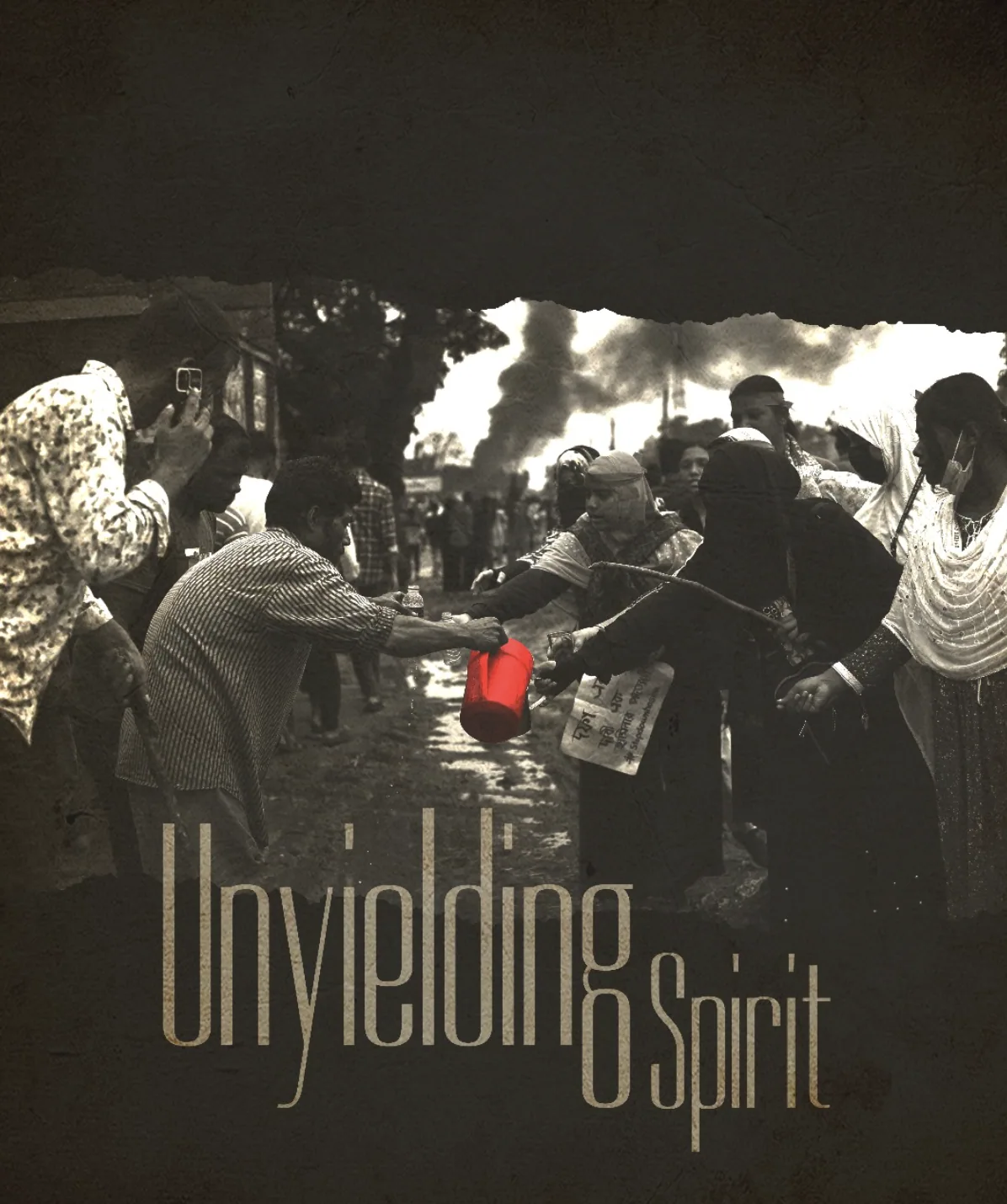
Unyielding Spirit is a concept-based poster project that explores the themes of resilience, solidarity, and humanity during a period of social and political unrest in Bangladesh. The project was developed as a visual communication exercise, using a single powerful photograph to tell a larger story about collective struggle and community support.
The central image captures a local resident offering water to protesters amid a chaotic environment. Rather than focusing only on confrontation, the poster highlights the compassion and unity that often emerge during times of crisis. Through the careful use of composition, symbolism, and visual storytelling, the project presents two contrasting realities: the hardship of protest and the kindness shown by ordinary people.
Accompanying the poster is a concept paper that explains the historical context, visual message, symbolism, and social significance of the image. Together, the poster and the written analysis demonstrate how photography can communicate complex social issues and preserve meaningful moments in history.
Why this project
I chose this topic because I wanted to explore the human side of a social movement rather than focusing only on conflict and violence. While large-scale protests are often remembered for political events and public demonstrations, I believed that the small acts of compassion shown by ordinary people also deserve attention. A simple gesture, such as offering water to protesters, represents empathy, solidarity, and collective resilience.
As a Digital Film and TV Production student, I wanted to demonstrate how a single photograph can communicate a powerful narrative without relying on extensive text or dialogue. This project allowed me to analyze the relationship between visual composition, symbolism, and emotional storytelling. It also reflects my interest in documentary photography and visual communication, where images become historical records that preserve important social moments and encourage critical thinking.
What I learned
[What I learned — the old page showed the theatre text here by mistake]